540-478-9735
kjonescounselingllc@gmail.com
Kim Jones, LPC
1820 Country Club Rd.
Harrisonburg, VA 22802
Anxiety Therapy
When your mind won't slow down, you don't have to figure it all out alone.
Maybe you look like you have everything together, but internally, you're exhausted from worrying, overthinking, and trying to anticipate what could go wrong.
You may replay conversations after they happen, second-guess your decisions, worry about disappointing people, or feel like you're constantly trying to keep everything under control.
Maybe you're tired of feeling this way.
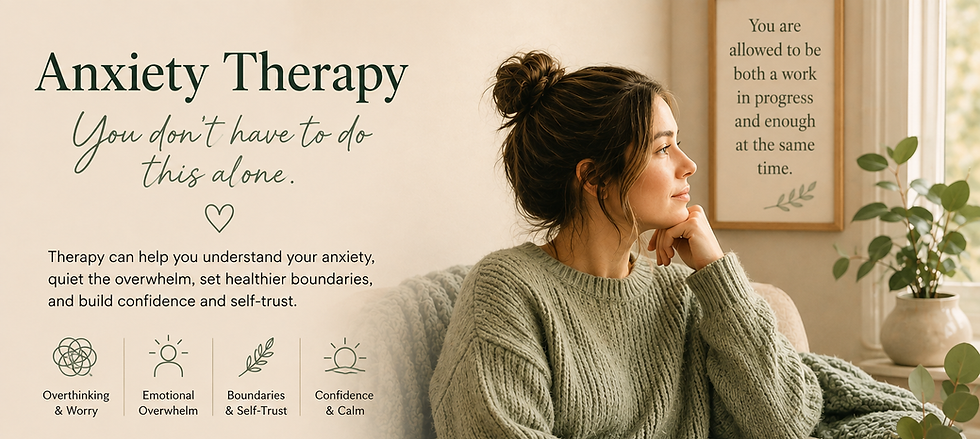
Therapy can be a place to slow down, understand what's happening beneath the anxiety, and begin developing a greater sense of confidence and trust in yourself.
What can anxiety look like?
Anxiety doesn't always look like panic.
Sometimes it looks like:
-
Constant overthinking or worrying
-
Second-guessing yourself and your decisions
-
Difficulty relaxing or feeling present
-
Fear of disappointing or upsetting other people
-
People-pleasing and difficulty saying no
-
Feeling responsible for everyone else's emotions
-
Perfectionism or putting tremendous pressure on yourself
-
Feeling overwhelmed by everyday responsibilities
-
Trouble quieting your thoughts at night
-
Avoiding situations because you're afraid of getting it wrong
-
Feeling physically tense, restless, or on edge
-
Difficulty trusting that things will be okay
-
You may even wonder why you can't simply "turn it off."
If you've been living with anxiety for a long time, these patterns can begin to feel like part of who you are.
They aren't a personal failure.
You don't have to keep fighting yourself.
When anxiety has been part of your life for a long time, it can be easy to become frustrated with yourself.
You might think:
"Why am I still worrying about this?"
"Why can't I just let it go?"
"What if I make the wrong choice?"
"What will people think of me?"
Therapy isn't about telling you to stop worrying or simply think positively.
It's about creating space to understand your experiences, recognize patterns, and develop a different relationship with your thoughts, emotions, and yourself.
How therapy can help
In our work together, we can explore the patterns contributing to anxiety while building greater self-awareness, confidence, and self-trust.
Therapy may include working on:
Understanding your anxiety
We can explore what tends to activate your anxiety and how it affects your thoughts, emotions, relationships, and everyday life.
Building self-trust
Anxiety can make you question yourself constantly. Therapy can help you become more comfortable making decisions, listening to your needs, and trusting your own judgment.
Setting healthier boundaries
If your anxiety is connected to fear of rejection, conflict, or disappointing others, learning to communicate your needs can be an important part of building confidence.
Managing emotional overwhelm
You can develop a better understanding of your emotional responses and learn ways to navigate difficult moments with greater awareness and intention.
Challenging self-criticism
You don't have to motivate yourself through shame. Therapy can help you develop a more compassionate and realistic way of relating to yourself.
Anxiety and your relationships
Sometimes anxiety shows up most clearly in relationships.
You may find yourself:
-
Worrying about whether someone is upset with you
-
Needing reassurance
-
Avoiding difficult conversations
-
Saying yes when you really want to say no
-
Trying to anticipate what everyone else needs
-
Feeling responsible for keeping the peace
-
Fearing that setting a boundary will cause someone to leave
If you've learned that being agreeable, accommodating, or "easy" helps you feel safer in relationships, it can be difficult to know what you actually want or need.
Therapy can be a space to explore those patterns without judgment.
A warm, collaborative approach
My approach is trauma-informed, relational, and person-centered. I draw from attachment-based, experiential, DBT, and IFS-informed practices.
I believe therapy should be collaborative rather than something that is simply done to you.
Together, we can work toward helping you feel more grounded, confident, and connected to yourself.
You don't have to arrive knowing exactly what you need.
You can simply start with:
"I'm tired of feeling this way."
That's enough of a place to begin.
What you may be looking for
Maybe you're ready to:
-
Feel less consumed by worry
-
Stop second-guessing yourself
-
Become more comfortable setting boundaries
-
Feel more confident in your decisions
-
Understand yourself more deeply
-
Stop constantly seeking approval
-
Feel more present in your relationships and daily life
-
Develop a stronger sense of self-trust
You don't have to become a completely different person.
The goal is to feel more like yourself, without anxiety running the show.
You don't have to do this alone.
If anxiety has been taking up more space in your life than you'd like, therapy can provide a supportive place to begin making sense of it.
You deserve a space where you can be heard, understood, and supported without judgment.
Life is really hard, but you don't have to do it alone.
Ready to take the next step?
Kim Jones, LPC
K Jones Counseling
Virtual and In-Person Therapy in Virginia